Hand-Stitched Textiles: Why Families Are Returning to Needle Arts
From embroidery to quilting, slow crafts are reshaping how households spend time together.
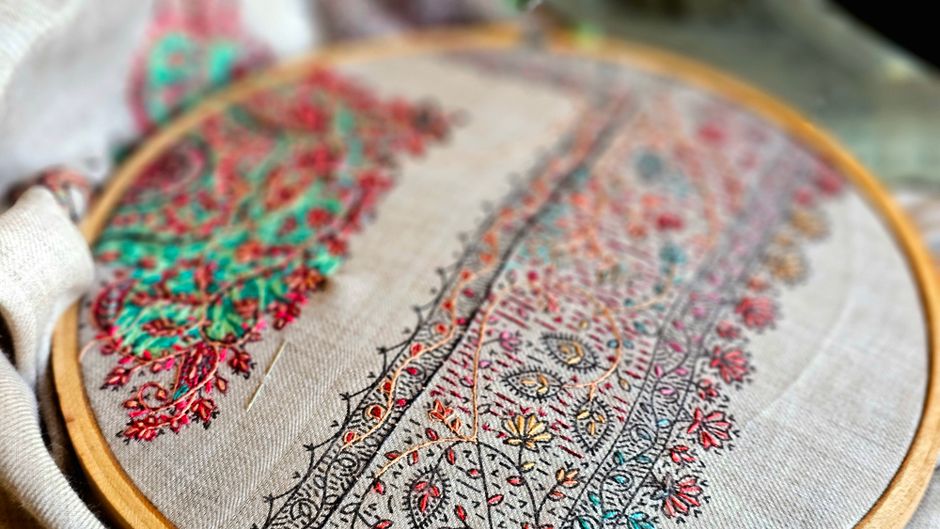
Hand-stitched textiles occupy an unusual place in family life. They're neither essential nor trendy—yet more households in 2026 are threading needles together than at any point in the past two decades.
Whether it's a parent teaching a child to embroider, or siblings collaborating on a quilt, needle arts have quietly become a portal to undistracted time. No screens, no notifications, just hands and thread.
The why matters. Understanding what draws families back to these old crafts reveals something about what we're searching for in an increasingly fragmented world.
The Quiet Revival
Hand-stitching never actually disappeared. It lived in grandmother's sewing baskets and craft rooms across the country. What's shifted is perception.
Social media, particularly image-heavy platforms, has made these crafts visible again. A well-photographed embroidery hoop or hand-quilted blanket reads as both heritage and rebellion against mass production.
But the real driver isn't aesthetic. Families cite the meditative quality—the repetitive motion, the small visible progress. It's a craft where a ten-year-old and a sixty-year-old work at roughly the same pace, making it rare as a genuine intergenerational activity.

What Families Are Making
Accessibility and the Learning Curve
One misconception: hand-stitched textiles require skill before you start. The opposite is true. A basic running stitch—the foundation of most hand sewing—is taught in minutes.
What hand-stitching demands is consistency, not talent. The same repetitive motion that makes it meditative is what gradually builds competence. A child who completes ten small embroidery projects owns skills their peers may not.
Resources abound. The Craft Council catalogs classes, patterns, and community groups. Independent craft blogs and YouTube tutorials lower barriers further, though the tactile feedback of learning alongside someone—a parent, grandparent, or teacher—remains irreplaceable.
Many families find that Loops Threads kits remove the decision paralysis of choosing materials, allowing households to focus on the practice itself rather than procurement.
Trade-Offs Worth Considering
Strengths
- Genuinely screen-free time that feels restorative rather than restrictive.
- Works at any pace—fifteen minutes or three hours; no session length pressure.
- Produces physical objects that carry memory and intention.
- Adaptable to any budget and skill level; starts with thread and needle.
Trade-offs
- Initial learning curve can frustrate impatient makers.
- Results take time; instant gratification is absent.
- Requires sustained focus—not suitable for all temperaments.
- Material costs compound if working on larger projects like quilts.
Beyond Craft: What Hand-Stitching Teaches
Families who stitch together report unexpected benefits beyond the finished textile. Patience compounds. Conversations flow differently without competing stimuli. There's space for a child to ask questions without rushing.
Hand-stitching also teaches consequence. A dropped stitch matters; a skipped seam changes the outcome. This isn't failure—it's feedback. The object itself becomes a record of effort and attention.
There's something to be said for making something that will outlast you. A hand-quilted blanket or embroidered cloth carries the maker's intention forward to someone else's child.
Begin with a single small project—a simple pillowcase or a framed embroidery piece. Buy only what you need for that project. The habit of working together matters far more than ambition.
The Persistence of Needle and Thread
Hand-stitched textiles aren't a trend that will vanish when the next hobby arrives. They've survived every technological disruption so far because they solve something real: the need to make something with your own hands while sitting near someone you care
about.
In a year like 2026, when family time is fragmented across devices and schedules, that's worth more than any finished object. Though the finished object—soft, stitched, purposeful—is a nice bonus.