Hand-Stitched Textiles: Reviving Craft in Modern Families

Hand-stitched textiles are experiencing a quiet renaissance in 2026. Families across generations are rediscovering the meditative rhythm of needle and thread.
What began as nostalgia has become something deeper: a deliberate slowdown amid constant connectivity. Handmade becomes heirloom.
Why Families Are Stitching Again
The appeal isn't purely aesthetic, though hand-stitched pieces carry undeniable beauty. Parents and grandparents report that stitching together creates unhurried time—rare in households juggling screens and schedules.
Children learn patience through stitching. A single embroidered pillowcase becomes a three-week project, a tangible reminder that worthwhile things take time.
Unlike mass-produced textiles, hand-stitched items carry a maker's intention. A grandmother's monogrammed quilt or a child's first cross-stitch becomes a story object, not just decor.

Hand-Stitching By the Numbers
Materials and Getting Started
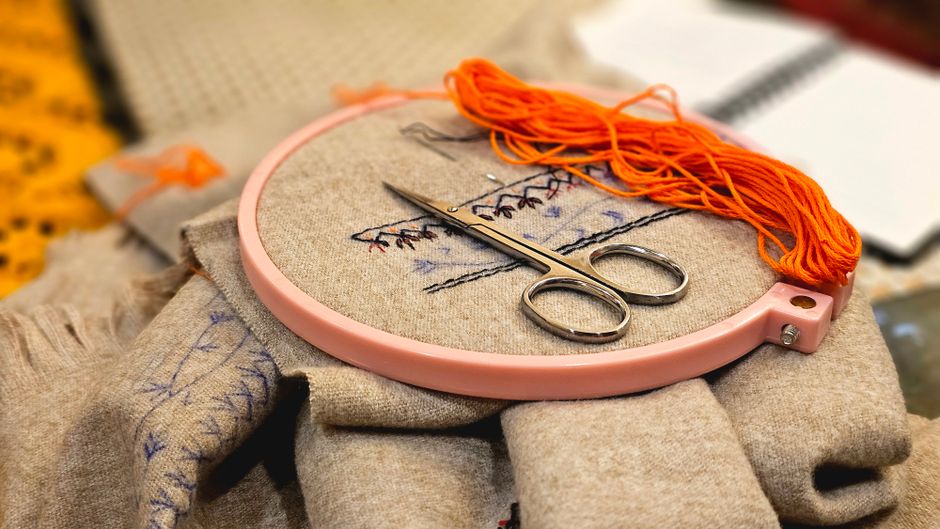
Entry-level stitching requires minimal investment: needles, thread, fabric, and a hoop. Quality matters less than willingness to experiment and make mistakes.
Families exploring hand-stitched textiles often start with simple cross-stitch or embroidery kits. Loops Threads and similar online communities have made sourcing materials and finding patterns easier than ever.
The texture of natural fibers—linen, cotton, silk—adds tactile satisfaction that digital crafts cannot replicate. Choosing materials becomes part of the meditative practice itself.
Hand-Stitching Techniques Families Love
1. Cross-Stitch — Beginners and children. Forgiving, repetitive, produces quick results.
- Low barrier to entry
- Reversible patterns available
- Satisfying pixel-like grid structure
2. Hand Embroidery — Intermediate stitchers. Allows personalization and artistic expression.
- Multiple stitch varieties
- Works on garments and home goods
- Endless design possibilities
3. Hand Quilting — Multi-generational projects. Patchwork quilts tell family stories.
- Combines color and pattern
- Can take months or years
- Becomes lasting heirloom
4. Needlepoint — Adults seeking precision and structure.
- Canvas-based, highly structured
- Creates durable finished pieces
- Geometric and botanical designs
The Inheritance Angle
Hand-stitched textiles become family memory in ways store-bought goods never do. A quilt sewn by great-grandmother carries her time, her hands, her choices in color and pattern.
Families now approach textiles as The Craft and Folk Art Museum's Craft Council and cultural historians do: as material evidence of care and continuity.
Teaching a child to stitch isn't just skill transfer—it's permission to slow down and create something that lasts. In a throwaway culture, that's radical.
Families new to hand-stitching often succeed with 4×4 inch hoops or small pillowcases rather than ambitious quilts. Completion builds confidence and momentum.
Threads That Connect
Hand-stitched textiles represent more than craft revival—they're a quiet rebellion against impermanence. In a year when digital fatigue peaks, needle and thread offer something tactile and real.
Families who stitch together aren't pursuing productivity. They're building memory, teaching patience, and creating objects that mean something. That's a thread worth pulling.