How Heritage Craft Techniques Are Reshaping Modern Family Traditions
Teaching kids timeless skills rooted in craft history builds connection, patience, and lasting memories.
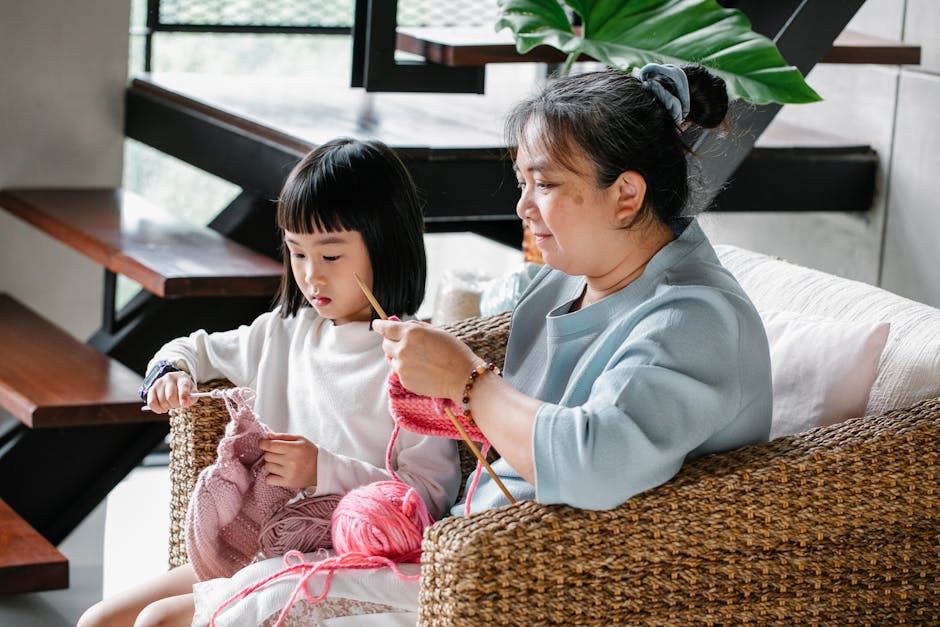
There's something grounding about passing a skill from one generation to the next—especially when that skill comes with decades, sometimes centuries, of history behind it.
Heritage craft techniques, from hand-dyeing to traditional weaving, are experiencing a quiet revival in 2026, not as nostalgic hobby projects but as genuine tools for family bonding and childhood development.
Unlike fleeting trends, these practices root families in something tactile, intentional, and real.
Why Heritage Crafts Matter Now
Screen time and digital-first childhoods have created an appetite for tactile learning that parents can feel. Heritage crafts fill that gap.
Hand-spinning wool, embroidery, basketry, and natural fiber preparation demand focus without requiring fancy equipment or Wi-Fi.
Research on traditional craft practices shows they strengthen fine motor control, spatial reasoning, and emotional regulation in children.
A child learning to wind yarn or tie dye fabric isn't just occupying their hands—they're building problem-solving skills and learning patience in an accelerated culture.
Five Heritage Techniques Worth Teaching
1. Hand Knitting & Crochet — Low barrier to entry, meditative, produces wearable results.
- Ancient textile tradition dating back centuries
- Teaches rhythm, counting, and spatial planning
- Minimal startup cost; supplies last for years
2. Natural Dyeing — Combines science, history, and creative expression.
- Uses plant materials—madder, indigo, walnut hulls
- Teaches color theory and chemistry organically
- Creates unique, unrepeatable results
3. Weaving on Simple Looms — Visual craft that builds spatial and mathematical thinking.
- Frame looms and simple cardboard looms are cheap to make
- Interlocking threads reinforce pattern logic
- Finished pieces have immediate, tangible value
4. Embroidery & Needlework — Portable, accessible, historically significant across cultures.
- Teaches precision and planning before execution
- Rich cultural heritage—every region has traditions
- Finished work becomes keepsake-quality
5. Basket Weaving & Fiber Work — Full-body, tactile craft that builds strength and coordination.
- Uses natural, renewable materials
- Involves rhythmic, meditative hand work
- Produces functional home objects

Getting Started Without Overwhelm
Heritage crafts don't require a home studio, specialist knowledge, or a big budget. Start with what you already have interest in.
If your family enjoys textiles, begin with yarn and simple needles. Caron and similar suppliers offer beginner-friendly yarn in accessible colors and weights—many are formulated to be forgiving for learning hands.
YouTube tutorials from actual fiber artists (not corporate craft channels) preserve techniques authentically. Search for "traditional hand-dyeing" or "grandmother's knitting method" to find practitioners teaching real methods.
The goal isn't perfection. First projects are messy, uneven, and exactly right.
When a child makes something with their own hands, they develop a relationship with making itself. That changes how they see objects, value, and creativity.
Observation from family craft educators

Building Family Memory & Identity
Heritage crafts are personal archives. A blanket knitted together over winter months carries the specific moment of that family's connection.
Teaching a technique your own parent taught you—even imperfectly—threads continuity through generations. The mistakes and personal variations become the story.
Handicraft traditions carry cultural identity too. If your family has roots in textiles, weaving, embroidery, or other fiber work, learning the regional style connects kids to ancestry.
These aren't skills that become obsolete. They're portable, meaningful, and they work whether the power's on or off.
Pick one technique and commit to 30 minutes weekly for a month. Consistency builds skill faster than occasional intense sessions. Celebrate the first finished project—imperfect counts.
The Slowness Is the Point
Heritage crafts thrive on slowness. They're the opposite of optimization culture.
When a family sits together to hand-spin wool, dye it, and weave it into something wearable, they're choosing depth over speed. They're building something that can't be rushed or outsourced.
In 2026, when nearly everything else moves at digital velocity, those afternoons of thread and fiber become small sanctuaries. They're how families remember how to make, how to wait, and how to value what they build together.