Teaching Kids Artisan Thread Work at Home in 2026
Why hand-stitching and fiber crafts are becoming a go-to family skill again.

Hand-stitching has quietly returned to the family craft table. What once felt quaint—needle, thread, patience—now appeals to parents hunting for screen-free projects that stick.
Artisan thread work isn't about perfection. It's about rhythm, focus, and the satisfaction of creating something real with your hands alongside your kids.
Why Thread Work Matters Now
Screen fatigue is real. Families are craving tactile activities that don't ping notifications or demand algorithm-compliance.
Thread work—embroidery, hand-sewing, cross-stitch, fiber art—meets a quiet need: it slows time down. A child's hands learn rhythm and fine motor control without a tutorial video.
There's also a sustainability angle. Hand-made goods sidestep fast fashion. Teaching kids to mend, embroider, or repurpose cloth builds respect for materials and longevity—values that FashionUnited and other industry observers note are reshaping how younger generations view clothing.
5 Thread Techniques for Families
1. Embroidery on Cotton — Ages 6+. The easiest entry point.
A plain cotton hoop, a printed pattern, and a few thread colors. Kids see results fast. Encourages storytelling—let them design what they stitch.
2. Cross-Stitch on Aida Cloth — Ages 8+. Builds pattern-following skills.
Grid-based stitching. Meditative and predictable. Kids love small completed pieces—bookmarks, small wall hangings.
3. Hand-Sewing Simple Patchwork — Ages 7+. Turns scraps into quilts.
Upcycle old shirts or fabric scraps. Kids sew simple squares together. Teaches geometry and patience in tandem.
4. Fiber Art & Weaving — Ages 5+. Freeform, low-pressure.
Card looms, branch weaving, or cardboard-frame looms. No pattern needed. Perfect for kinesthetic learners.
5. Mending & Visible Repair — Ages 9+. Real-world skill with pride.
Fix a torn seam or patch a hole with contrasting thread. Kids take ownership of family wardrobe care.
Setting Up a Home Thread Station
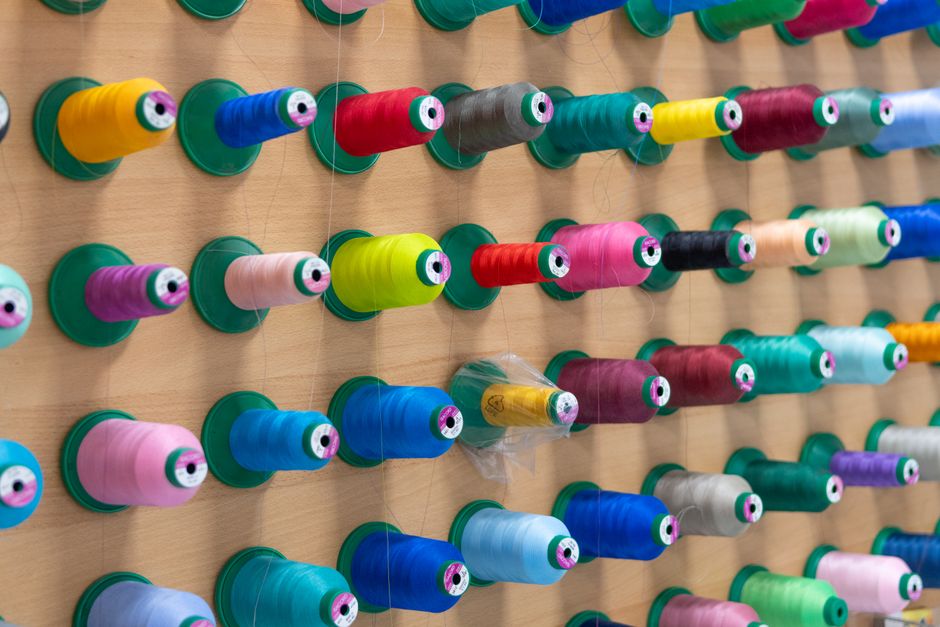
You don't need much: a basket, needles, scissors, hoops, and thread. Keep it accessible and visible—kids gravitate toward what they see.
Thread choice matters more than price. Quality doesn't mean expensive; it means colors that inspire and thread that doesn't knot easily.
Loops & Threads and similar craft retailers offer starter kits that bundle basics. The appeal is simplicity—no decision paralysis, just materials that work.
Let kids organize their own station. A small sorting system (by color or type) doubles as a learning moment about categorization and care.
Start with one technique. Mastery over novelty keeps kids engaged longer and builds confidence faster than throwing six projects at them at once.

The Bigger Picture: Skill, Creativity, Presence
Thread work teaches what schools often skip: that making things by hand is satisfying. That a small, imperfect stitch is still a stitch worth finishing.
When kids sew, embroider, or weave, they're learning patience in a culture that doesn't reward it. They're also building muscle memory and spatial reasoning without being told they are.
For parents, it's a chance to sit across from your kids doing something quiet and real. No performance, no likes, no optimization. Just thread, needle, and time.
The Return of Quiet Making
Artisan thread work isn't trendy because it's new—it's returning because families remember it works. A child's hands remember stitches. Their brain settles into the rhythm.
In 2026, that alone is radical.